Formatting Failures That Freeze Your Defense: A Doctoral Candidate's Guide to Auditing Citations Before Submission
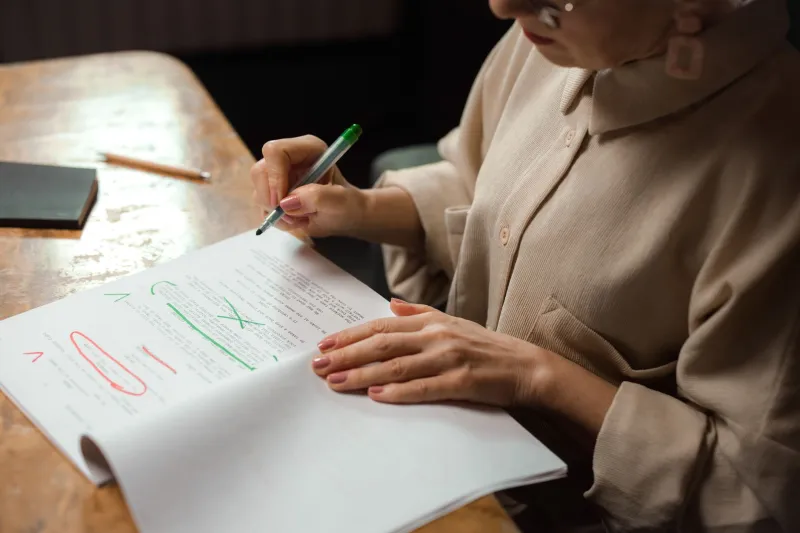
For most doctoral candidates, the final weeks before submission are consumed by the intellectual heavy lifting: sharpening arguments, reconciling data, and rehearsing defense presentations. Citation formatting rarely commands the same urgency. It should.
Across graduate programs in the United States, improperly formatted citations and inconsistent reference lists are among the most frequently cited reasons committees request mandatory revisions prior to a scheduled defense. These are not minor stylistic preferences. In many programs, they constitute formal submission deficiencies—ones that can push your defense date back by weeks or, in more severe cases, by an entire academic semester.
Understanding why this happens, and building a deliberate audit process into your pre-submission timeline, is one of the most strategic investments a doctoral candidate can make.
Why Citation Errors Carry Disproportionate Weight
Committee members review dissertations with a trained eye for scholarly rigor. A manuscript riddled with inconsistent citations signals something beyond carelessness—it suggests a candidate may not have engaged deeply enough with the sources themselves. Whether or not that inference is fair, it shapes the committee's overall impression of the work.
More practically, formatting errors create verification problems. When a DOI is missing, a volume number is transposed, or an author's name is rendered inconsistently across in-text citations and the reference list, committee members cannot efficiently confirm the legitimacy of your sources. That friction translates directly into revision requests.
In programs that follow American Psychological Association (APA) guidelines—common across social sciences, education, and psychology—even a single generation of formatting errors can cascade. A missing retrieval date on a website citation, an incorrect edition number for a foundational text, or a misplaced ampersand in a multi-author citation can each trigger a flag. Multiply that across a 200-page manuscript and the problem compounds quickly.
The Three Citation Systems Most Doctoral Candidates Use—and Where Each One Breaks Down
APA (7th Edition)
The most recent edition of the APA Publication Manual introduced significant changes that continue to trip up candidates who learned earlier formatting conventions. Among the most common errors:
- Running heads: The 7th edition eliminated the requirement for running heads in student papers, yet many candidates still include them—or omit them from manuscripts where they remain required (such as manuscripts intended for publication).
- DOI formatting: DOIs must now be presented as hyperlinks (https://doi.org/...) rather than the older "doi:" prefix format. Mixing these conventions within a single reference list is a common and easily avoidable error.
- In-text citations with three or more authors: The 7th edition requires the use of "et al." from the first citation onward. Candidates who learned the 6th edition convention—spelling out all authors for the first in-text citation—frequently introduce inconsistencies throughout their manuscript.
- Capitalization in reference titles: Only the first word of an article or chapter title (and any proper nouns) should be capitalized in APA references. Sentence case errors are pervasive and immediately visible to trained reviewers.
Chicago (17th Edition)
Chicago style, prevalent in humanities disciplines including history, art history, and religious studies, presents its own audit challenges—primarily because it offers two distinct documentation systems: notes-bibliography and author-date. Candidates must use one system consistently throughout the entire manuscript.
Common Chicago pitfalls include:
- Footnote versus endnote consistency: Some programs specify one format; others leave it to the candidate. Either way, the chosen format must be applied uniformly.
- Ibid. usage: While still technically permissible, many Chicago style guides discourage heavy reliance on "ibid." Candidates using reference management software that auto-generates footnotes should manually verify that shortened citations are applied correctly after the first full reference.
- Publisher location requirements: Chicago style requires the city of publication for books, a detail that APA dropped in its 7th edition. Candidates who work across both styles—or who have adapted writing from other contexts—frequently omit this field.
MLA (9th Edition)
MLA formatting, standard in literature and language disciplines, underwent substantial revision in its 9th edition, released in 2021. The updated edition introduced a more flexible "container" model for citations that, while logically intuitive, creates significant formatting inconsistencies when applied without careful attention.
Frequent MLA errors include:
- Works Cited versus Bibliography: MLA uses "Works Cited," not "Bibliography" or "References." Using the wrong header is a common and easily corrected mistake that nonetheless signals inattention to detail.
- Hanging indent formatting: MLA's Works Cited page requires a hanging indent for all entries. Candidates who compile references in plain text and format later frequently miss this requirement.
- Medium of publication: While the 9th edition streamlined how mediums are indicated, candidates frequently omit or mislabel digital sources, particularly for online journal articles accessed through library databases.
Building Your Pre-Submission Citation Audit
A systematic audit does not require starting from scratch. It requires a structured pass through your manuscript with specific checkpoints in mind. The following framework is designed to be completed in three focused sessions.
Session One: Reference List Review Work through your reference list in isolation, verifying each entry against the official style manual for your discipline. Cross-check author names for consistency, confirm that all required fields are present (DOIs, URLs, publication dates, volume and issue numbers), and verify capitalization conventions. Use your institution's library database to pull original source records and compare them against your entries.
Session Two: In-Text Citation Verification Conduct a document-wide search for every in-text citation. Confirm that each corresponds to an entry in your reference list, that author names match exactly, and that page numbers—where required—are accurate. Pay particular attention to paraphrased passages, where candidates frequently omit citations entirely under the assumption that attribution is implied.
Session Three: Cross-System Consistency Check If your dissertation draws from sources in multiple disciplines, verify that you have not inadvertently mixed citation conventions. This is especially common in interdisciplinary programs. A single manuscript should follow one citation system throughout, with no hybrid entries.
Leverage Your Institution's Resources Before the Committee Does
Most US research universities offer graduate writing center consultations specifically for dissertation formatting. Many also provide access to style-specific citation management workshops through their library systems. Tools such as Zotero, Mendeley, and EndNote can automate significant portions of the formatting process—but they are not infallible, and auto-generated citations must still be manually verified against your style manual.
If your program requires institutional approval of your reference list prior to final submission, schedule that review well in advance of your intended defense date. Revision requests at that stage carry real timeline consequences.
Treat Citation Accuracy as a Defense Strategy
A meticulously formatted dissertation signals scholarly competence before a single question is asked during your defense. It demonstrates that you have engaged seriously with your sources, that you understand the conventions of your discipline, and that you have approached the submission process with the same rigor you applied to your research.
Citation formatting is not a clerical afterthought. For doctoral candidates navigating the final stretch before submission, it is one of the most controllable variables in the entire defense process. Audit it accordingly.